1. Reduce Long Queues at QSR Counters
Long queues are a common challenge for busy QSR outlets.
During peak hours, several customers may arrive at the same time. If all of them have to place their orders through one or two cashiers, queues can quickly build up.
Self-ordering kiosks provide additional ordering points inside the QSR.
Instead of every customer joining the cashier queue, customers can walk up to an available kiosk and place their order themselves. This can help distribute the ordering load and improve customer movement inside the outlet.
For QSRs handling high order volumes, reducing counter congestion can make a significant difference to the overall customer experience.
- Help QSRs Serve Customers Faster
Speed is a major part of the QSR business model.
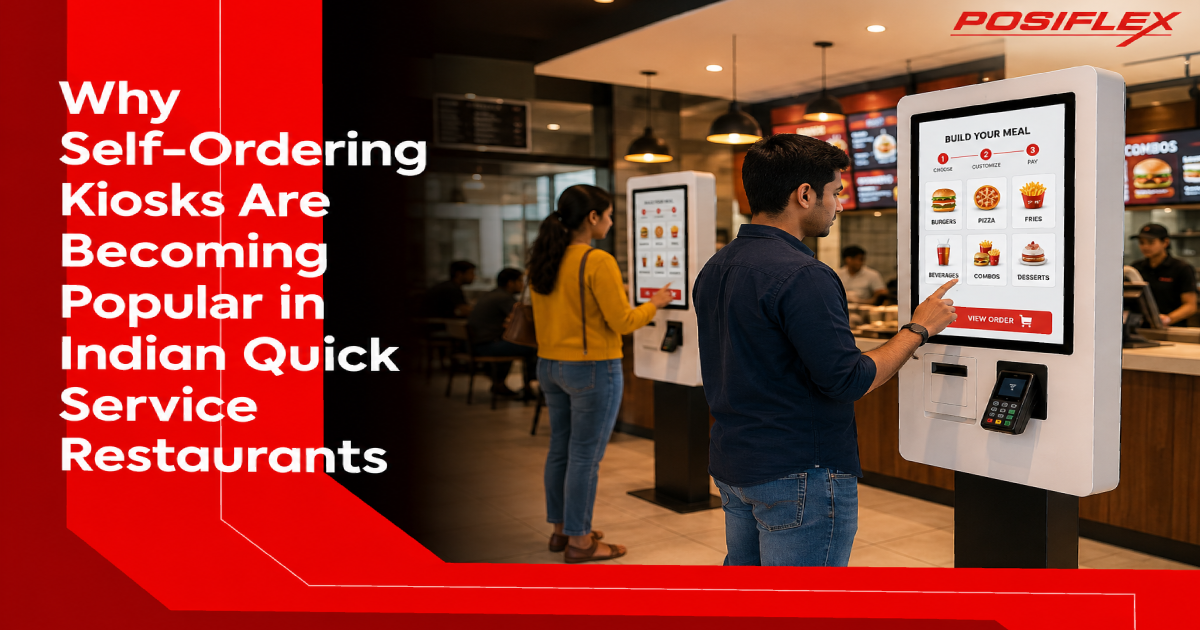
Customers generally do not expect to spend a long time deciding and placing an order at the counter. A self-ordering kiosk provides customers with a visual menu where they can quickly select their preferred items.
For example, a customer ordering a burger combo can select the burger, choose the size, add fries and a beverage, select additional toppings, and proceed to payment directly.
By allowing customers to manage the ordering process themselves, QSRs can create a faster front-counter workflow.
- Make Combo Meals and Add-Ons Easier to Promote
QSR menus often include combo meals, meal upgrades, sides, beverages, desserts, and additional toppings.
Self-ordering kiosks can present these options at relevant stages of the ordering process.
For example:
Burger → Make it a Combo → Add Fries → Add Beverage → Add Dessert
This makes it easier for customers to discover available add-ons and meal upgrades.
For QSR operators, this can create more opportunities to promote higher-value combinations without relying entirely on cashiers to verbally recommend every option.
- Reduce Manual Ordering Mistakes
QSR counters can become extremely busy during peak periods. When employees are handling multiple customers, taking orders manually, answering questions, processing payments, and managing queues simultaneously, mistakes can occur.
A self-ordering kiosk allows customers to enter their selections directly.
Customers can see the selected products, quantities, customizations, and total amount before confirming the order.
This can help reduce misunderstandings associated with manually communicated orders and provide customers with greater visibility over what they have selected.
- Handle Peak-Hour QSR Traffic More Efficiently
Peak hours are particularly important for QSR businesses.
Lunch breaks, evenings, weekends, holidays, and special promotions can bring a sudden increase in customer traffic. QSRs need to process these orders efficiently without creating excessive queues.
Self-ordering kiosks can provide additional ordering capacity during these periods.
If a QSR has multiple kiosks, several customers can place their orders simultaneously rather than waiting for individual cashier interactions.
This can help the outlet manage higher customer volumes without relying exclusively on expanding the billing counter.
- Improve the QSR Customer Experience
QSR customers increasingly expect convenient and technology-enabled experiences.
A self-ordering kiosk gives customers more control over how they place their order.
They can browse the complete menu, view food images, check prices, select customizations, review their cart, and complete payment at their own pace.
This can be particularly useful for customers who already prefer digital ordering experiences through food delivery apps and other online platforms.
Bringing a similar digital experience inside the QSR outlet can make the physical ordering process more convenient.
- Reduce Pressure on QSR Cashiers
In a traditional QSR setup, cashiers may have to manage several tasks simultaneously:
- Answering menu-related questions
- Handling order modifications
Self-ordering kiosks can take over part of the ordering process.
This allows counter employees to focus on customers who need assistance, manage exceptions, coordinate with the kitchen, and support other front-of-house activities.
The objective is not necessarily to eliminate staff but to redistribute workload more efficiently.
- Create a More Consistent Ordering Process
For QSR chains operating multiple outlets, maintaining consistency is important.
Self-ordering kiosks can provide a standardized digital menu and ordering interface across locations, depending on the software setup.
The same product categories, combo structures, pricing information, customization options, and promotional messages can be presented consistently.
This can help QSR brands create a more uniform ordering experience across their outlets.
- Integrate With QSR POS and Kitchen Systems
The real value of a self-ordering kiosk comes from how well it works with the QSR’s existing technology.
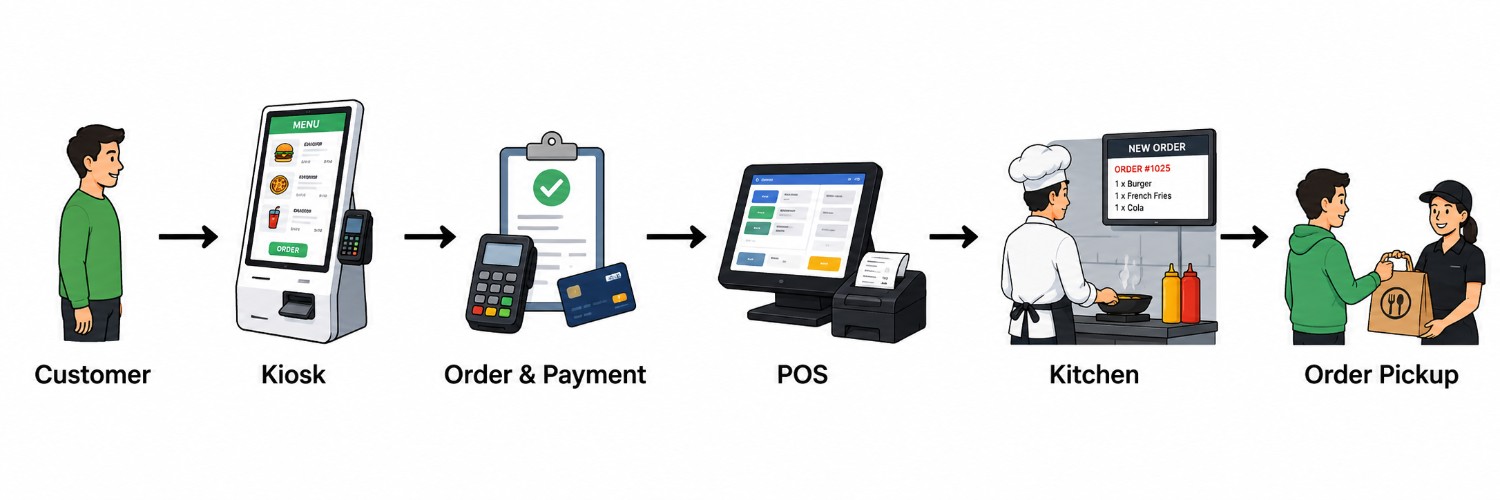
When integrated with the POS system, kiosk orders can be transferred digitally rather than requiring employees to manually re-enter the order.
The order can then move through the QSR’s kitchen workflow for preparation and fulfillment.
For example:
Kiosk Order → POS → Kitchen Display System → Food Preparation → Pickup Counter
This connected workflow can help reduce manual steps and make order management more efficient.
- Make Digital Menu Promotions More Effective
QSRs frequently introduce limited-time offers, seasonal products, new combos, and promotional deals.
A digital kiosk provides an opportunity to prominently display these offers during the ordering process.
For example, a QSR launching a new burger can feature it on the kiosk’s home screen or menu interface.
Similarly, combo upgrades and promotional products can be displayed alongside relevant menu selections.
Unlike printed menus, digital menus can be updated according to the QSR’s changing promotional requirements.
- Support High-Volume QSR Formats
Self-ordering kiosks can be particularly relevant for QSR formats that experience high customer footfall, including:
- Airport and transit food outlets
For these businesses, the ability to process more orders efficiently can directly support day-to-day operations.